


Safeguarding Human Rights in the Age of AI: Insights from the Global Index on Responsible AI 2024
As artificial intelligence (AI) technologies become embedded in governance, commerce, and everyday life, their impact on fundamental human rights is becoming increasingly pronounced. The 2024 Global Index on Responsible AI (GIRAI) offers the most comprehensive picture yet of how countries are responding to these challenges, with a particular focus on the human rights implications of AI.
By Daphine Nkunda
As artificial intelligence (AI) technologies become embedded in governance, commerce, and everyday life, their impact on fundamental human rights is becoming increasingly pronounced. The2024 Global Index on Responsible AI (GIRAI)offers the most comprehensive picture yet of how countries are responding to these challenges, with a particular focus on the human rights implications of AI.
Developed by a global network of researchers and experts, GIRAI is the first tool to set globally relevant benchmarks for responsible AI and assess them across countries. It measures national progress across three core dimensions:Responsible AI Governance, Responsible AI Capabilities,andHuman Rights and AI. Each dimension captures how governments and non-state actors are advancing or falling short of key indicators of ethical, inclusive, and accountable AI development.
The Human Rights and AI dimension provides a critical lens into where global efforts currently stand and where urgent action is needed. It covers a broad range of thematic areas, including data protection, public participation and awareness, gender equality, children’s rights, cultural and linguistic diversity, and labour protections and right to work, offering key insights into both progress and persistent gaps.
Global Patterns: A Stark Divide Between Regions
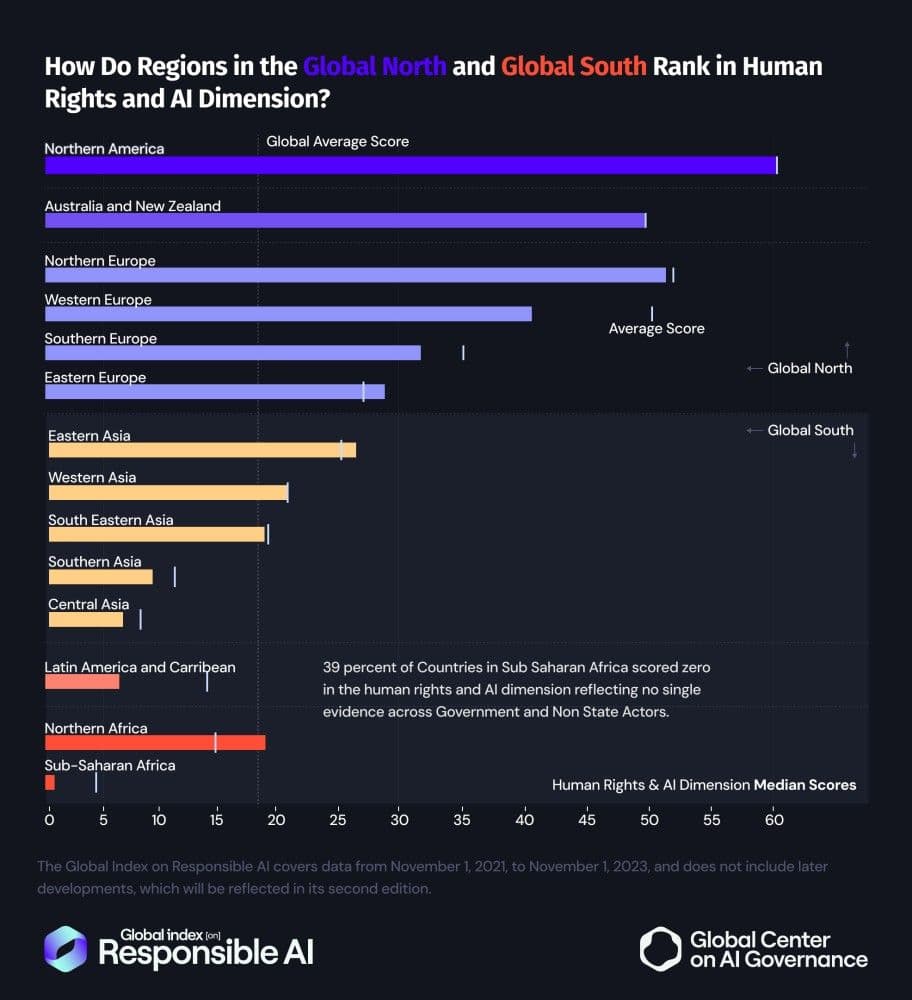
The Human Rights and AI dimension reveals a striking global pattern: while regions in the Global North, including Europe, North America, and Australia/New Zealand score higher than most regions, their performance still averages between 50 and 60 out of 100, highlighting that even the leading regions have significant room for improvement. Encouragingly, Eastern, Southeastern, and Western Asia along with the Middle East, show above-average scores, reflecting growing commitments to ethical AI development.
However, disparities are most severe in Sub-Saharan Africa. A worrying 39% of countries in the region registered a score of zero, indicating a lack of any documented initiatives, governmental or non-state, focused on protecting human rights in the context of AI. This highlights the urgent need for both political will and institutional support to build inclusive and accountable AI ecosystems.
Thematic Strengths and Gaps: Who Is Doing What?
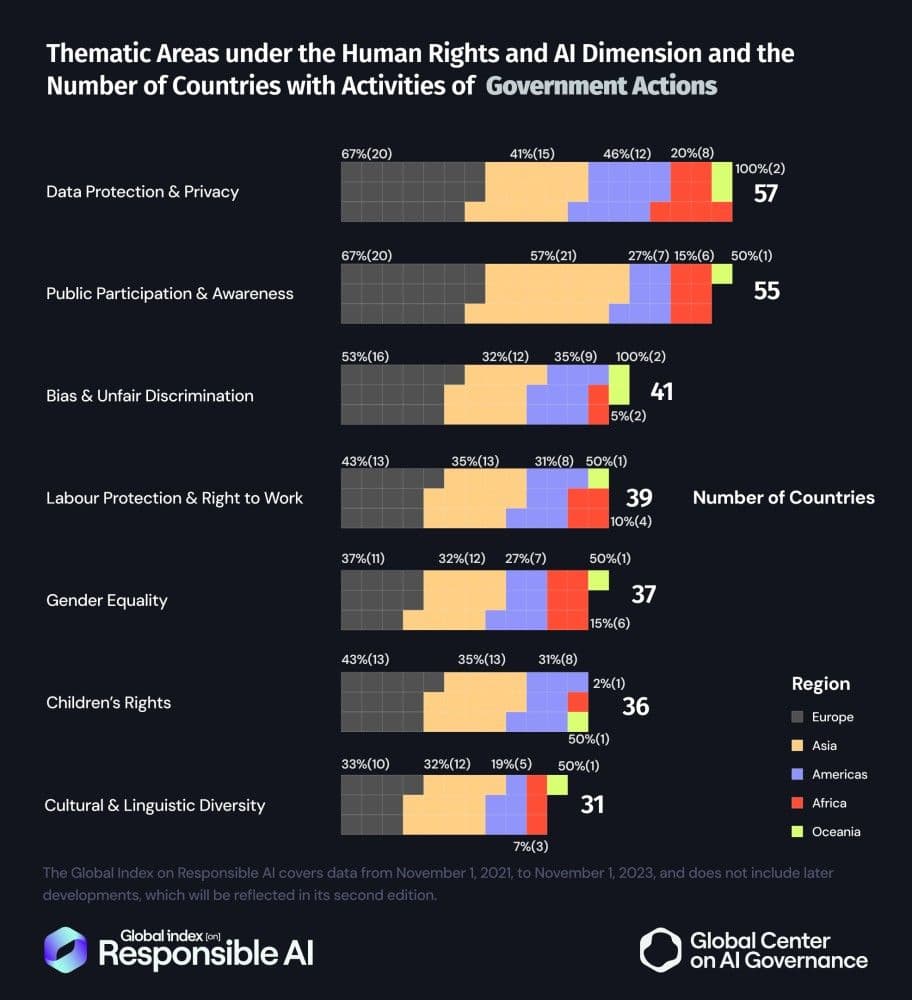
Among the thematic areas, Data Protection and Privacy is the most addressed, with 57 countries showing evidence of government action. This is a promising sign, as strong data governance lies at the heart of rights-based AI regulation. However, other areas, particularly gender equity, children’s rights, and cultural and linguistic diversity, remain severely underdeveloped.
For example, while most African nations show little engagement in children’s rights in AI, Egypt provides a notable exception. Its Supreme Council for Media, in collaboration with Parliament, is developing a strategy to shield children from online risks. This demonstrates that targeted, localized policy leadership is possible, even amid broader gaps.
Civil Society Steps In Where Governments Lag
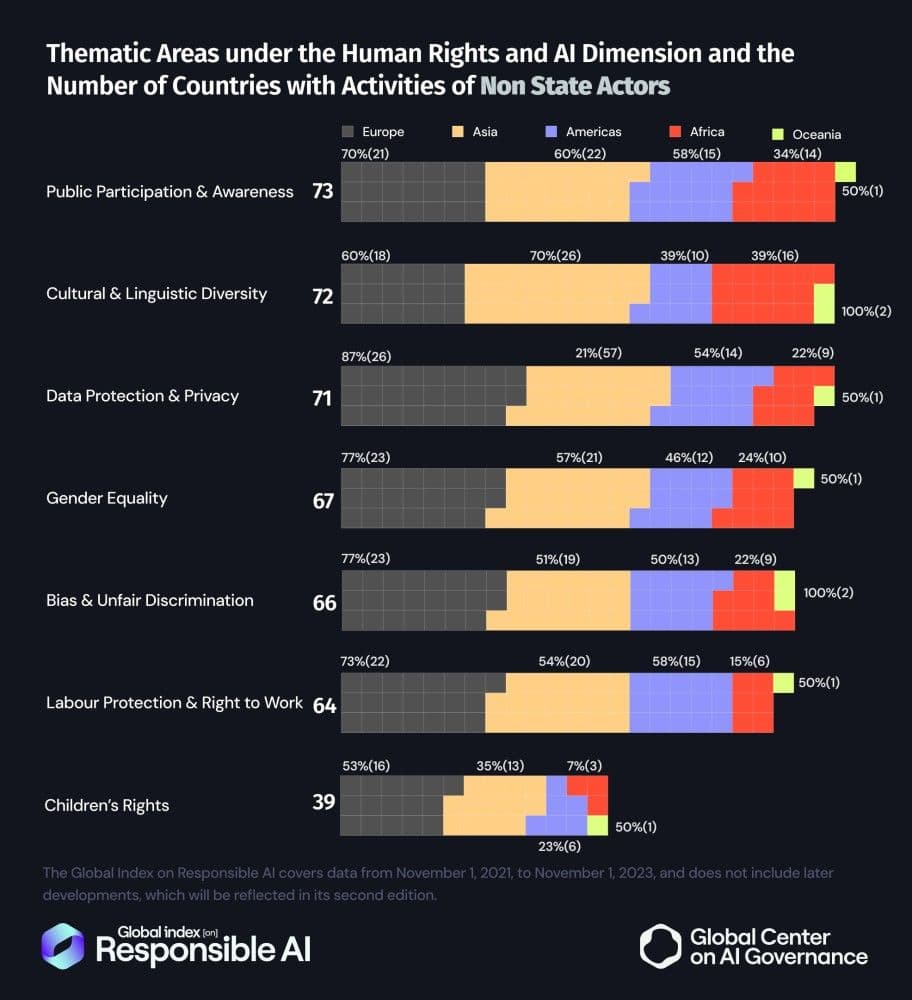
n the absence of strong government leadership, non-state actors are helping to fill the void. For example, organizations in 16 African countries are actively working to promote cultural and linguistic diversity in AI. This thematic area ranks as the second most active for civil society initiatives, highlighting the potential of non-governmental actors to drive innovation and uphold rights-based principles.
Still, as encouraging as these efforts are, they cannot replace the need for systemic protections. Sustainable change requires government-backed frameworks, legal accountability, and strong enforcement mechanisms.
The Risks of Regulatory Gaps
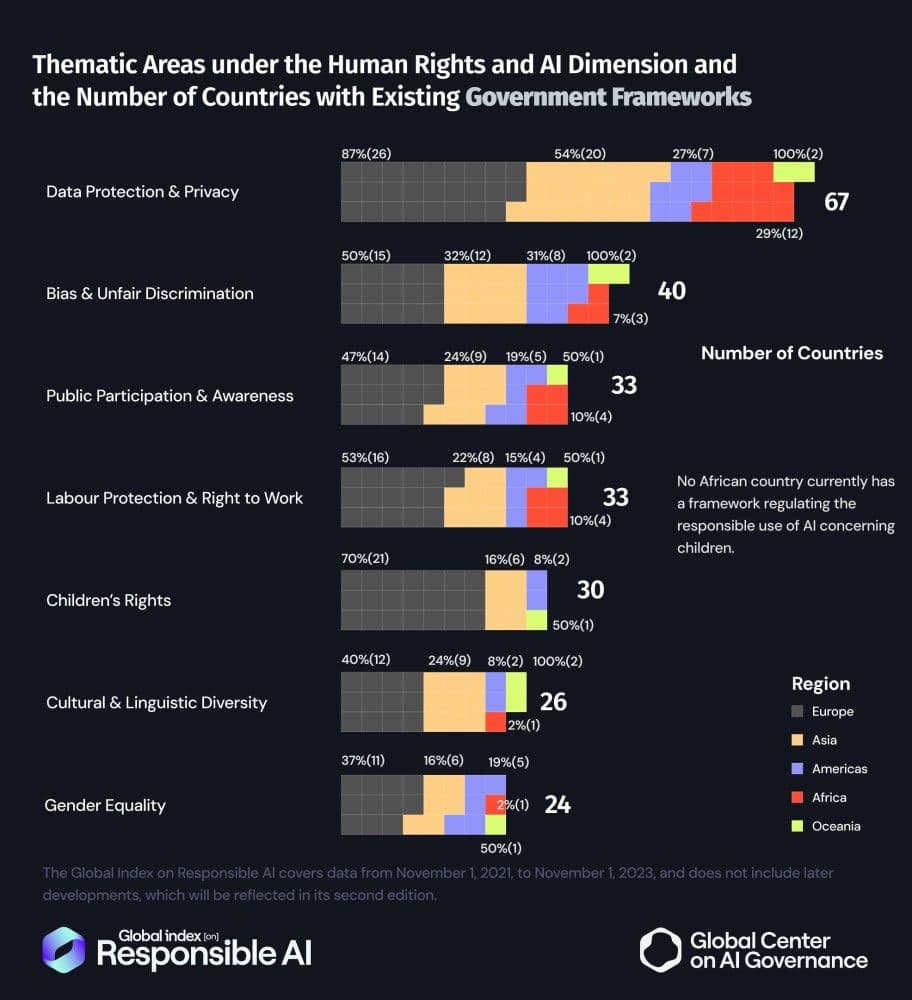
Although some governments have introduced AI-related policies, very few have developed enforceable legal frameworks. As of November 2023, no African country had a law specifically regulating AI in relation to children’s rights. This regulatory vacuum leaves millions of children vulnerable to risks such as data exploitation, algorithmic bias, and harmful digital content.
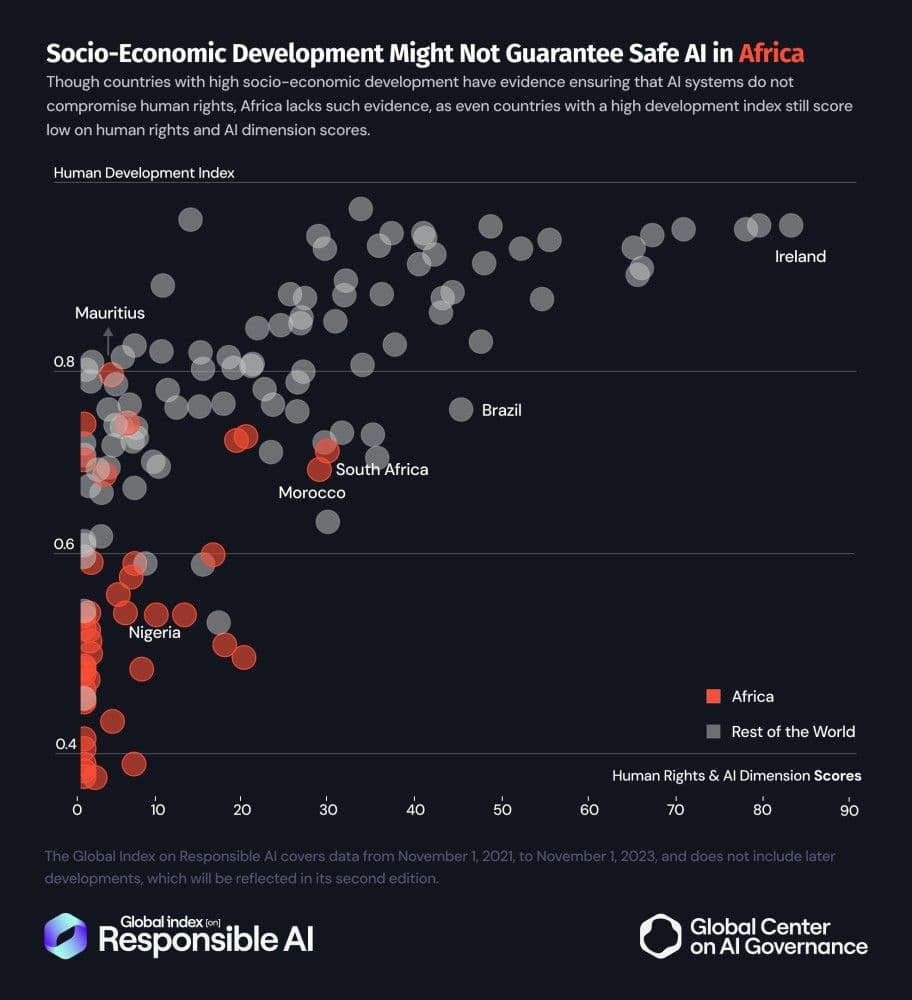
Contrary to expectations, socio-economic development alone does not ensure stronger protections. Countries like South Africa, Nigeria, and Morocco score relatively high on the Human Development Index yet show low performance on the Human Rights and AI dimension. This underscores the importance of regulatory maturity and institutional strength alongside economic growth.
From Policy to Law: The Enforcement Challenge
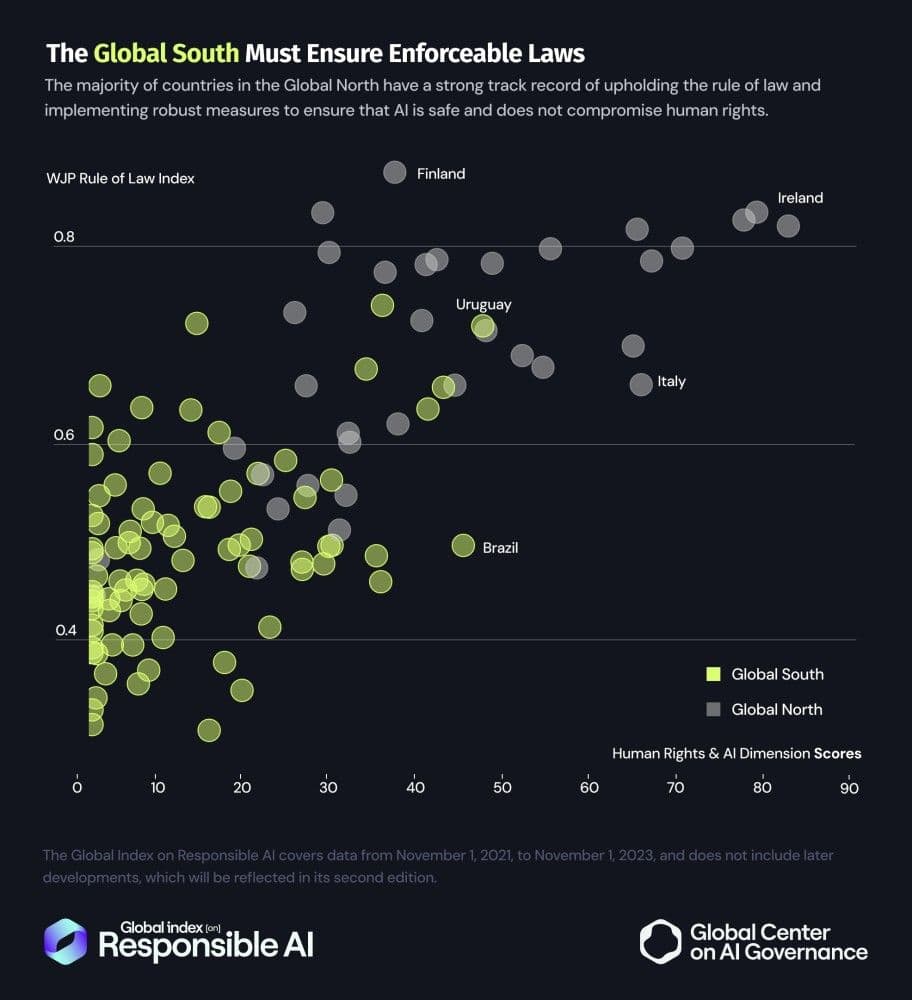
A broader trend captured by the GIRAI is the reliance on policy over enforceable law. Many countries in the Majority World have adopted policies or strategies on responsible AI, but few have passed laws with binding legal force. This limits accountability and leaves significant room for rights violations to go unaddressed.
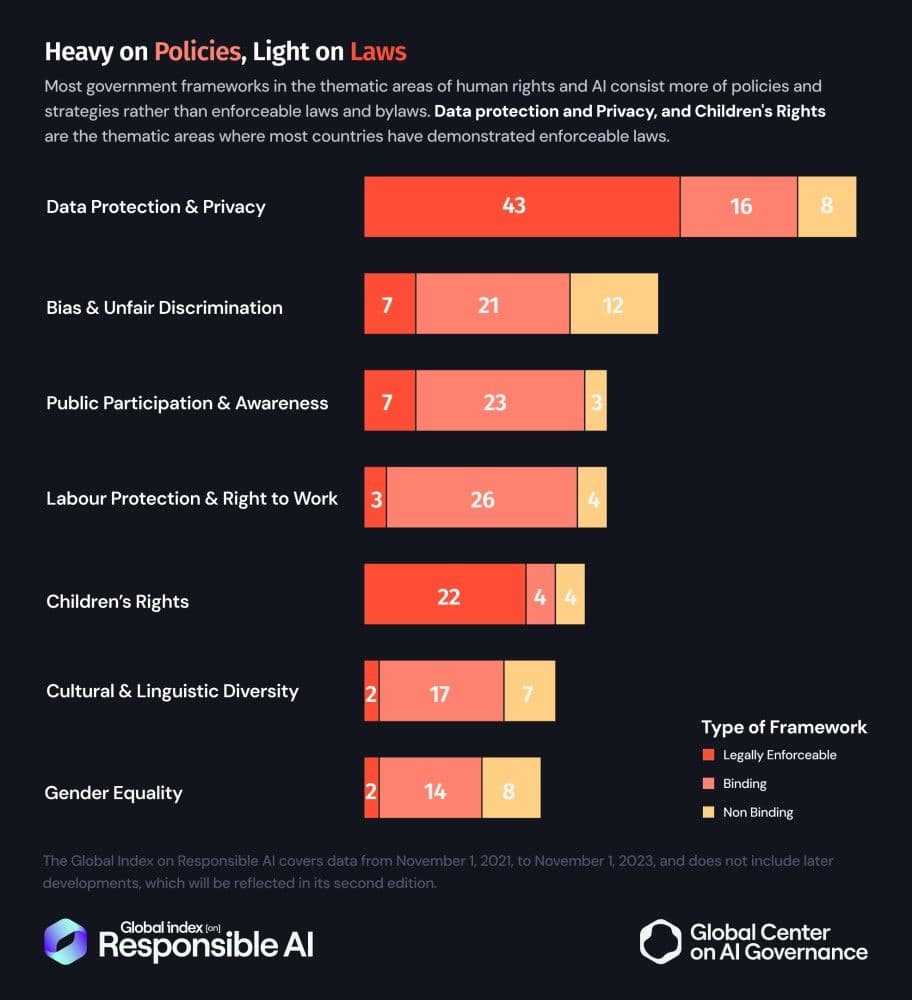
Only Canada and Greece have legally binding frameworks for gender equality in AI, and most countries rely on non-binding policy recommendations across other thematic areas. That said, some progress is evident in areas like data protection and children’s rights, where more countries have adopted enforceable laws. These examples show that stronger regulation is possible and urgently needed across the full spectrum of human rights in AI.
What Non-State Actors Are Doing
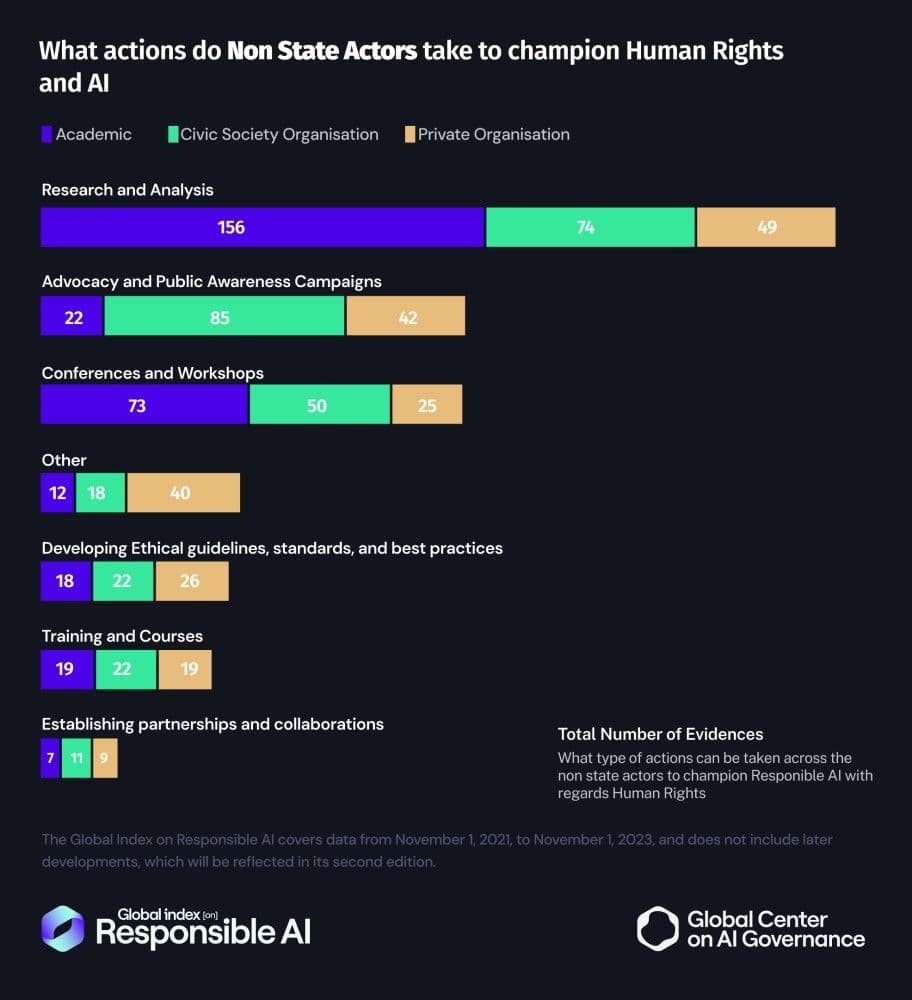
Research and analysis remain the most common activities by non-state actors, particularly academic institutions and think tanks. These efforts are often complemented by public awareness campaigns, conferences, and workshops. However, fewer initiatives focus on establishing partnerships, providing training, or developing standards. This highlights the need for greater coordination and investment to scale non-state contributions to responsible AI.
Deepen Your Understanding: New Reports and Webinars
To support continued learning and informed policymaking, the Human Rights and AI Analytical Report Series has been released alongside GIRAI. These in-depth reports unpack how human rights are being protected or violated by AI systems globally, and what governments, private sector actors, and civil society must do to ensure equitable outcomes.
Two webinars were also convened to discuss the findings, bringing together global experts and regional leaders to share insights and practical steps for advancing a rights-respecting AI future.
📹WATCH:Gender Rights in AI Governance
📹WATCH:Human Rights and AI
The 2024 GIRAI data confirms that a human rights-based approach to AI is not just a policy aspiration, it’s an urgent necessity. If AI is to serve the many and not just the privileged few, governments must move beyond voluntary principles and invest in enforceable laws, inclusive governance, and regionally grounded strategies. Civil society, international partners, and multilateral bodies all have a role to play in turning this vision into reality.
About the Data and Visualizations
The data featured in this article is drawn from the 2024 Global Index on Responsible AI (GIRAI). GIRAI captures the most comprehensive dataset on responsible AI practices globally, measuring national progress in 138 countries and jurisdictions.
Disclaimer:
The 2024 Global Index on Responsible AI covers data from November 1, 2021, to November 1, 2023, and does not include later developments.